
Exclusive: H100's Sander Andersen on the First Merger Ever Priced Entirely in Bitcoin


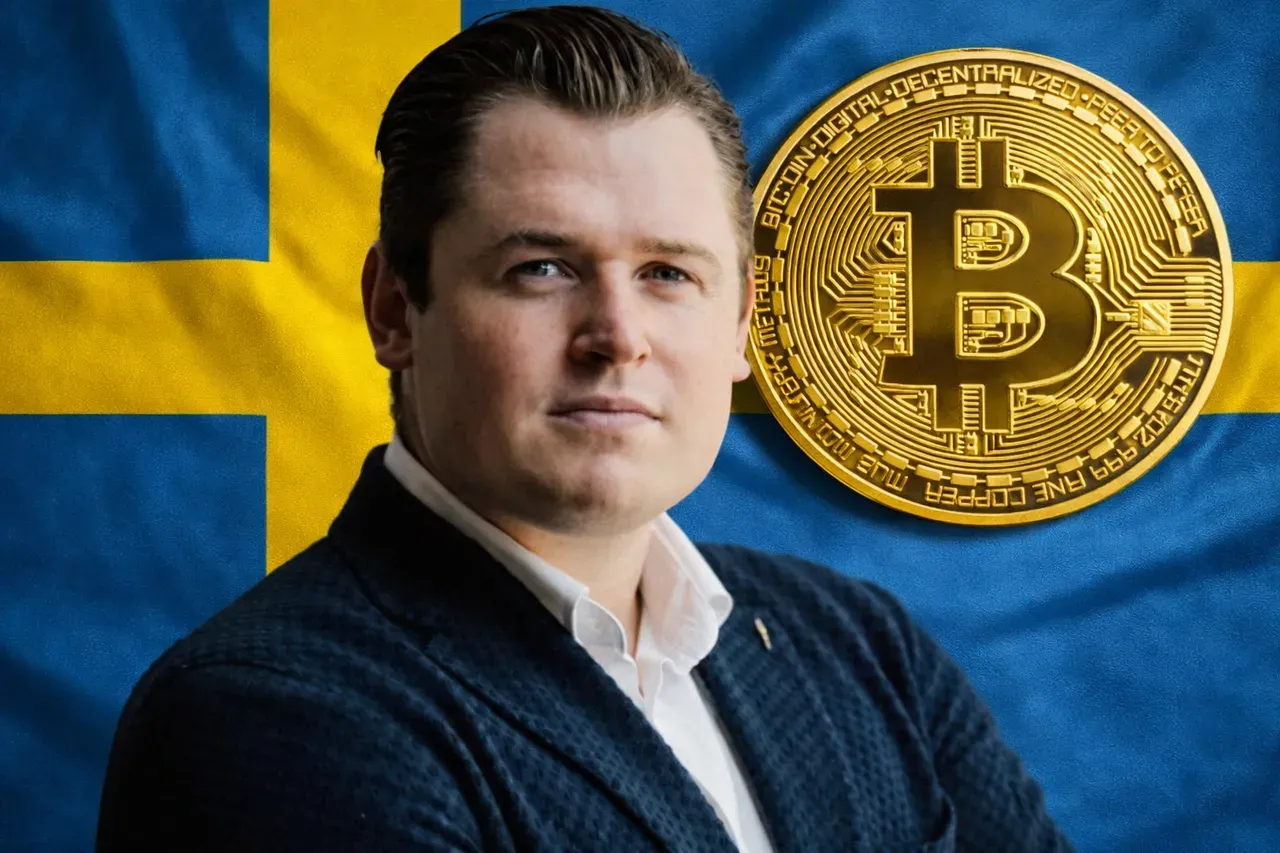
H100 Group closed the largest M&A transaction in European public Bitcoin equity history on 10 August, tripling its treasury to 3,506.4 BTC through a zero-cash, all-share deal. Executive Chairman Sander Andersen tells BitcoinTreasuries.net why pricing both sides of a merger in Bitcoin, rather than fiat, is the template capital-constrained European treasuries can use to grow while trading below net asset value.
H100 leapfrogs both of its European rivals in a single move
H100 Group announced on 10 August that it had completed its acquisition of the Norwegian entity NSD AS (formerly WR Start Up 594 AS), which brings direct and indirect ownership of Moonshot AS and PDI AS into the group, lifting its Bitcoin treasury from 1,051 BTC to 3,506.4 BTC. The Stockholm-listed company issued 790,534,666 new shares to the sellers, priced at SEK 1.86 apiece, and paid no cash. Before the deal, H100 trailed both France's Capital B, at 3,140 BTC, and the UK's Smarter Web Company, at 2,712 BTC. It now overtakes both in one transaction, trailing only Germany's Bitcoin Group SE, at 3,605 BTC, by fewer than 100 coins - second in Europe and 26th globally on bitcointreasuries.net leaderboard.
The deal, which received shareholder authorisation at H100's annual general meeting on 23 June, is the first M&A transaction in which both sides were priced entirely in Bitcoin rather than fiat currency. "We can accomplish much greater things together" than either company could alone, Andersen told bitcointreasuries.net, describing a negotiation in which value was measured coin-for-coin rather than in Swedish kronor or dollars.
The logic was set in motion earlier than most shareholders realised. Andersen told bitcointreasuries.net the decision to pursue consolidation rather than open-market purchases was made in the first quarter, once H100's board concluded Bitcoin was heading into an extended bear phase. That did not change the company's long-term thesis, he said, but it changed the near-term one: with H100's own mNAV below 1.0x for most of the year, issuing shares to buy Bitcoin on the open market would have diluted holders for no gain in Bitcoin per share. A merger priced in Bitcoin on both sides sidesteps that constraint entirely.
That distinction matters more than the headline number. Companies that acquire Bitcoin through the open market compete with every other institutional buyer for scarce supply, often at a premium. H100 instead absorbed 2,455.37 BTC, valued at roughly $154 million against the deal's own reference price, by issuing equity against equity at 1.0x modified net asset value on both sides. That reference price was fixed at SEK 598,926.69 per BTC (approximately $62,900), taken at 23:59 CEST on 31 July, the night before the transaction closed. Andersen was direct about why that structure was necessary: valuing the underlying Bitcoin identically on each side is, in his words, the only way a Bitcoin-for-Bitcoin deal can close at all. If the buyer and seller cannot agree on what a coin is worth independent of its fiat quote, there is no transaction.
Diluted on paper, richer on a fully diluted basis
The nominal dilution looks severe. H100 issued enough new stock to hand roughly 70 per cent of the enlarged company to the sellers, led by principal owner Geir Harald Hansen. Judged on Bitcoin per basic share, existing holders own a smaller slice of a bigger pie.
The more revealing metric sits on a fully diluted basis, and this is where the deal earns its billing as accretive rather than merely large. H100 carried a five-year, zero-coupon convertible bond of roughly 219 million Swedish kronor, around $23 million, issued in the third quarter of 2025. Before the merger, that debt sat against 1,051 BTC worth north of $60 million, implying leverage above 30 per cent. The acquisition added Bitcoin without adding a krona of new debt. The same $23 million in convertible obligations now sits against 3,506.4 BTC worth roughly $220 million at the deal's own reference price, cutting leverage against the Bitcoin base to near 10 per cent, by our calculation from the figures in the completion announcement rather than a leverage ratio H100 has itself published. Andersen puts the resulting increase in Bitcoin per fully diluted share at around 5 per cent, achieved, he notes, "in a bear market" and without raising fresh capital. Because the convertible converts regardless of price direction, fully diluted exposure is the metric bondholders and Bitcoin-native investors watch most closely, and it is the one Andersen chose to lead with.
That lower leverage is also what unlocks H100's next debate: what to do with more Bitcoin sitting against the same fixed debt load. Andersen was careful not to overstate the plan. Rather than announcing a preferred stock programme, he described the acquired team's derivatives experience as a starting point for making part of the balance sheet cash-flow generative, alongside a longer-term push into Bitcoin-backed credit once Europe's capital markets infrastructure catches up.
The acquisition brought more than coins
Hansen is not a passive seller. He founded the Bitminter mining pool in 2011, which at its peak accounted for a meaningful share of global hashrate and mined more than 208,000 BTC over its lifetime, roughly 1 per cent of Bitcoin's eventual supply, before winding down in 2020. He now holds the largest single stake in the combined company under a 12-month lock-up, a structure that ties his incentives to H100's share price rather than to an immediate exit. Hansen's thoughts were clear in his letter to shareholders ''I am committing almost everything I have built to this project because I believe in its future and I intend to be here for the long term.''
He arrives with a team. Moonshot AS and its affiliate bring Eirik Grøttum, a systematic trader, and Peter Warren, a derivatives and hedge fund veteran, both of whom Andersen credits with building cash-flow strategies around Hansen's own Bitcoin holdings prior to the merger. Andersen frames the acquisition as a talent transaction as much as a balance sheet one: H100 gains derivatives and asset management expertise it did not previously have in-house, alongside a founder whose technical grounding in Bitcoin predates most of the treasury sector by a decade. "M&A is rarely only the asset in itself," Andersen said. "It's also that two groups of people have worked together and figured out that we are actually going to accomplish better things together."
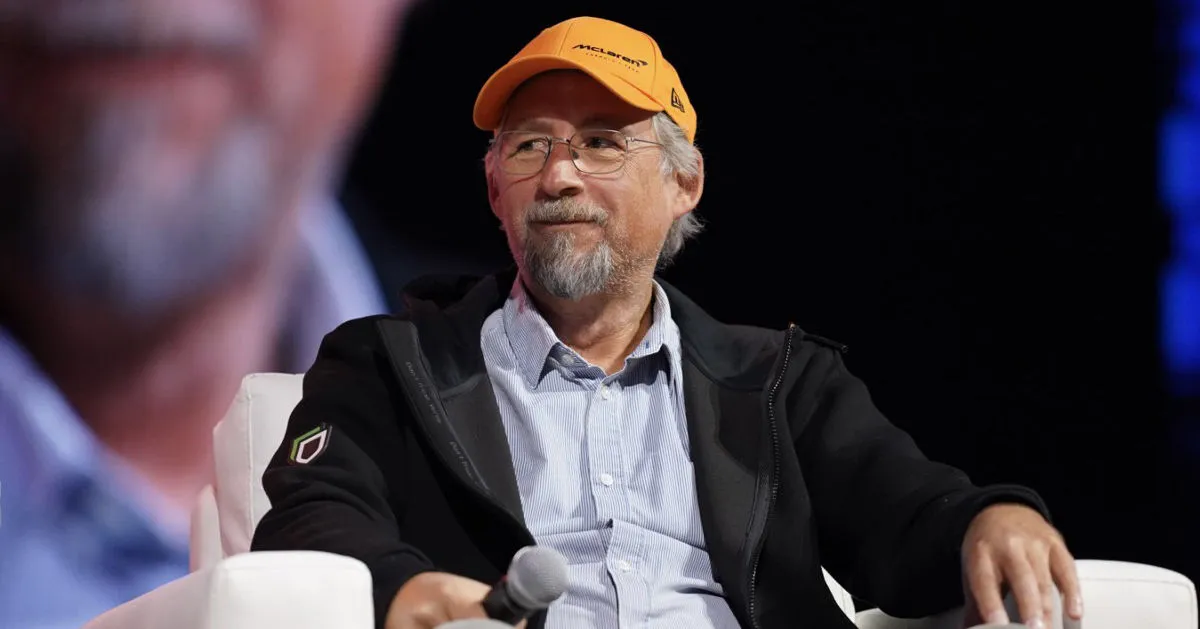
The acquisition builds on a shareholder base H100 had been assembling since it began raising capital as a Bitcoin treasury in May 2025. Blockstream co-founder Adam Back was an early and repeat lead investor across funding rounds, according to Andersen, alongside Tobam and UTXO Management. That network, he suggested, is part of why H100 could negotiate a Bitcoin-denominated deal with a counterparty who shared its frame of reference: Hansen, in Andersen's telling, cared more about the fully diluted Bitcoin-per-share outcome than the headline share price, which is what let the transaction close without either side pricing in a premium or discount.
Europe's treasuries are choosing consolidation over a single Strategy playbook
H100's timing is not incidental. Smarter Web Company, Capital B and H100 are the three names most frequently cited as candidates to bring the next European Bitcoin preferred instrument to market, and Andersen does not see that race as adversarial. He described Capital B's Alexandre Laizet and Smarter Web's Andrew Webley as counterparts rather than competitors, arguing that a larger, more credible Bitcoin equity sector in Europe benefits every issuer in it by pulling capital that currently defaults to US listings back onto European exchanges.
Andersen was equally candid that Europe will not simply import Strategy's playbook. European capital markets carry more conservative, legacy-oriented investors than their US counterparts, in his assessment, and reward proof of execution over declared intent. Completing a deal, not just announcing one, is what moves sentiment in a market this cautious, he argued, a pointed distinction given how many European treasury announcements have stalled between letter of intent and close. On credit, he was more measured than promotional: with more Bitcoin now against the same fixed debt load, H100 has room to develop cash-flow-generating derivatives strategies and, eventually, credit products. But he stopped short of promising a European equivalent of Strategy's preferred stack, suggesting instead that treasury companies pooling collateral across separate balance sheets, rather than one issuer dominating the category, may be the region's answer.
What happens once the discount closes
H100 closed the deal while still trading at a discount to net asset value, a condition Andersen expects to persist until the company demonstrates it can execute again, and faster. That is the wager behind pricing an entire merger in Bitcoin: it removes the need for a share price recovery or a capital raise to grow the balance sheet, both of which are difficult to secure below 1.0x mNAV. Whether the market re-rates H100 for it, or waits for the next transaction to confirm the pattern, is now the open question for a company that has gone from a health-technology listing to Europe's second-largest public Bitcoin holder in under a year. Andersen's own answer is that speed and repetition, not the size of any single deal, will be what closes the valuation gap.
Want more bitcoin treasury coverage in your search results? Add Bitcoin Treasuries as a preferred source on Google.