
Twenty One Capital CEO Rejects Pure Treasury Model, Eyes Berkshire-Style Bitcoin Empire


Editor's note: Raphael Zagury is confirmed to speak at the Second Annual Bitcoin Treasuries Conference, hosted by BitcoinTreasuries.net, on September 28 in New York. Limited tickets remain.
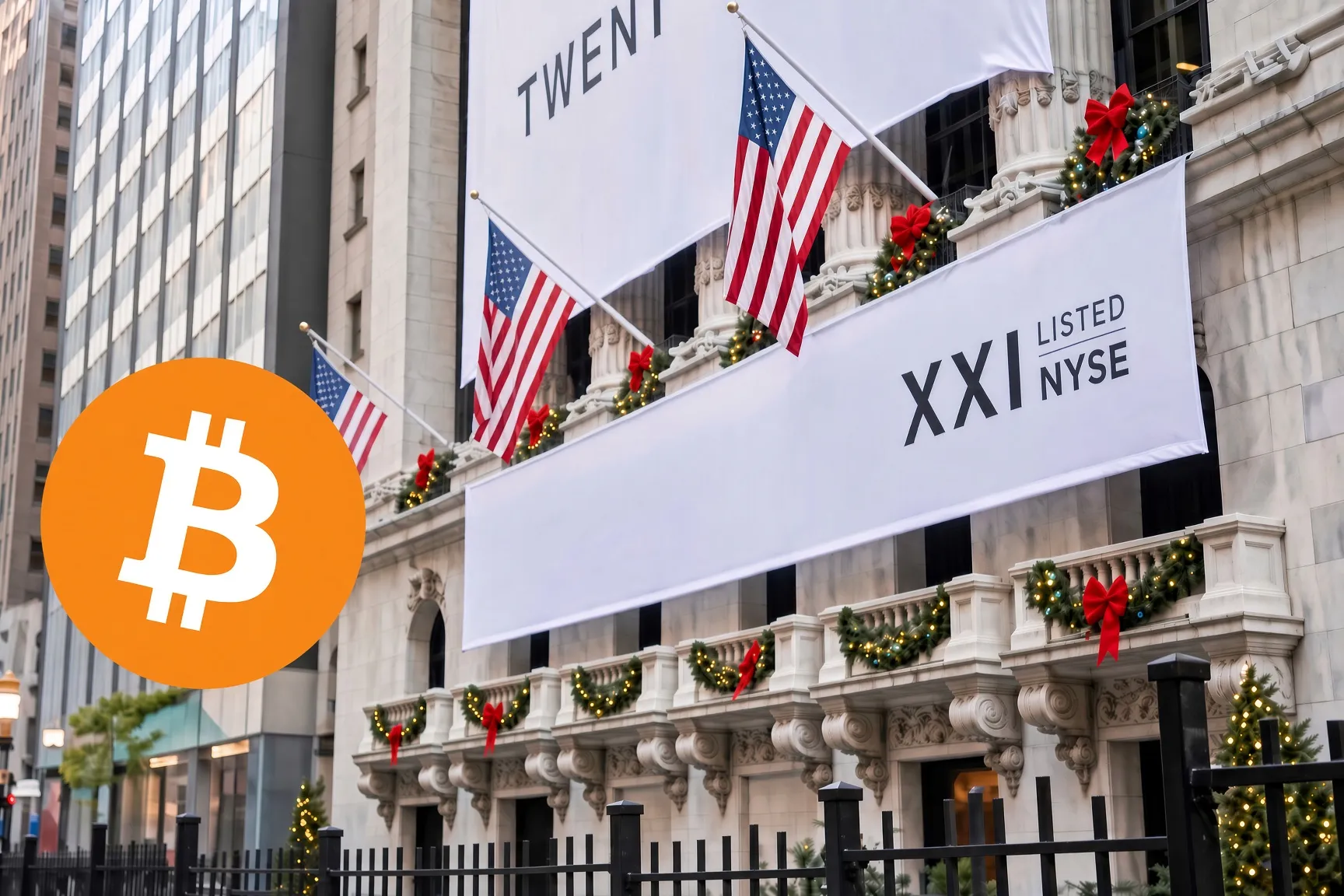
Raphael Zagury published his first shareholder letter as chief executive of Twenty One Capital (NYSE: XXI) on August 11, alongside the company's second quarter results. The letter describes something the public Bitcoin treasury sector has not seen attempted at this scale.
Zagury is not proposing a better accumulation engine. He’s proposing that the treasury stop being the business.
"Twenty One owns one of the largest Bitcoin balance sheets in the public markets," he wrote. "That is a real advantage, but if Twenty One is going to be worth owning, it must become more than a Bitcoin treasury."
He went further than most chief executives in this sector would. Twenty One, he told shareholders, is not a substitute for Bitcoin, and investors who want pure Bitcoin exposure should understand that Bitcoin itself is the cleanest expression of that view. The company has to earn the right to be something different.
A third model
Public companies holding Bitcoin currently sort into two recognizable shapes.
The first is the treasury company as a capital markets machine. Strategy is the archetype. The Bitcoin sits on the balance sheet and the actual business is the financial engineering and leverage built around it — the converts and the preferred stack and the at-the-market equity program that turn a rising share price into more coins per share. The legacy software business no longer informs the share price.
The second is the operating company that happens to hold Bitcoin. SpaceX is the cleanest example. The treasury is a reserve decision made by a company whose business has nothing to do with Bitcoin. The coins are on the balance sheet, and that is the extent of the relationship.
Zagury is describing a third shape. A Bitcoin balance sheet at the center and operating businesses around it. And critically, those operating businesses are meant to be Bitcoin-native rather than incidental.
The architecture he cited is Berkshire Hathaway, with a strong balance sheet at the center, independent operating companies around it, and capital allocation at the parent. He hedged the comparison immediately: "I make that comparison with humility. Berkshire earned it over decades. We have earned nothing yet."
The aspiration he set is that one day people will think of Twenty One and Bitcoin the way they think of Berkshire and insurance. A balance sheet that funds operating businesses which throw off cash.
The five priorities
The letter lays out the sequence:
Finish the corporate foundation. Governance, controls, key hires and reporting, in that order. Two independent directors joined during the quarter. Paul Lalljie, a former public company chief executive and chief financial officer, now chairs the audit committee. Karl Olsoni also serves on it.
Build and acquire operating businesses. The Berkshire architecture.
Develop capital markets capabilities. Debt and equity where they serve capital allocation, but the stated opportunity is in instruments backed by the recurring revenues of operating businesses, at a lower cost of capital.
Build an M&A capability. Zagury described the industry as being in a deep reset, with assets, teams and infrastructure repricing, and called it one of the broadest opportunity sets he has seen for a disciplined balance sheet.
Build toward lending and credit. Underwriting that leans on liquid, round-the-clock collateral rather than solely on the borrower. Done conservatively, he wrote, with low leverage and no shortcuts, possibly extending to managing third-party capital.
Point three is the one worth sitting with. Instruments backed by operating company revenues is a different financing base than instruments solely backed by Bitcoin. Strategy's preferred stack is ultimately collateralized by the bitcoin pile and by the market's willingness to fund it. Zagury is describing credit that services itself from cash flow. That is a materially different cost of capital if he can build the businesses to support it.
Elektron is the test
Twenty One announced on July 21 that it is no longer pursuing the acquisition of Strike, the deal announced on April 29. A potential merger with Elektron remains live.
Elektron is a large-scale global Bitcoin mining platform. The 10-Q describes it as a potential acquisition with no binding commitment, no agreed structure, and no board evaluation to date.
This is the operating business thesis made concrete. Walking from Strike and holding on Elektron moves the target from consumer Bitcoin financial services toward energy and mining infrastructure, which is a heavier, more capital-intensive, more cash-generative kind of asset. It is also the kind of asset that fits the Berkshire framing far better than a payments app does.
The company discloses one complication plainly. Zagury is chief executive of the entity providing management services to Elektron, and the filing states he may have a material financial interest in any such transaction that differs from shareholder interests. Any deal would run through the related person transaction policy and the relevant provisions of the Texas Business Organizations Code.
Zagury addressed the broader related-party question in the letter, writing that Tether's scale, capital and reach are real advantages and that the framework will remain rigorous and transparent. How Twenty One structures and discloses an Elektron transaction will tell the market more about this management team than any of the five priorities will.
What the balance sheet can do.
The strategy reads better once you look at what the treasury alone can currently do.
Twenty One held 43,514 Bitcoin at June 30, down one coin from year end. The single coin left as a payment, not a sale. The company reported a net loss of $413.5 million for the quarter and $1.27 billion for the first half, reflecting Bitcoin's decline over the period.
Twenty One reports Bitcoin Per Share in satoshis and Bitcoin Return Rate as its accretion metrics. Bitcoin Per Share went from 12,557 sats at December 31 to 12,547 sats at June 30. Bitcoin Return Rate for the half was negative 0.08 percent. These are minor changes but indicative that the company is serious about reporting bitcoin-native metrics and using the asset as its hurdle rate.
At $4.58 across 346,636,211 Class A shares, Twenty One’s market capitalization sits near $1.59 billion. Against $486.5 million of convertible principal and $106.1 million of cash, enterprise value mNAV works out to roughly 0.77x. Book equity per share is $6.28.
Zagury named the discount without softening it. He wrote that the gap could be viewed as a misallocation of capital, and that management shares that view.
Two structural facts shape what he can do about it. Approximately 16,116 Bitcoin, or 37 percent of the stack, are pledged as collateral against the convertible notes and are unavailable for general corporate purposes while pledged. Unencumbered Bitcoin is closer to 27,398 coins. And the notes themselves carry a 1% coupon with a 2030 maturity and an effective conversion price near $13, which means roughly $5.0 million of annual cash interest and conversion well out of the money at current prices.
The operating cost base is small. Twenty One used $11.6 million of cash in operations across six months. Until Twenty One starts acquiring operating businesses or starts new ones, there’s little burn rate. With the stock below the value of its Bitcoin and 37 percent of the treasury pledged, building operating businesses is the primary lever that grows the company from here.
What to watch
Named operating hires. The letter says searches for key operating roles are underway. Names are the first falsifiable evidence.
An Elektron structure. Terms, consideration and the independent review process.
A buyback authorization. Zagury has now said on the record that the discount looks like a misallocation of capital. The mechanism would be cash or unencumbered Bitcoin to potentially buyback equity.
Third quarter Bitcoin Per Share. Movement means something changed in the capital structure.
The promised update. Zagury said to expect a fuller one later this year, and committed to writing shareholders at least quarterly. He will also appear in person before then. Zagury is confirmed to speak at the Second Annual Bitcoin Treasuries Conference on September 28 in New York.
The read
Twenty One came public in December 2025 with Bitcoin acquired at an average cost of $84,865 and a mandate to compound the position. Rather than promise a return to the capital markets playbook that defined the 2025 cohort of treasury listings, Zagury is arguing the company should be judged on something else entirely.
Whether that works is an open question, and he framed it as one. The plan will take time, he wrote, but it cannot mean a year of waiting. Actions, not words, will move the company forward.
The interesting part is not whether Twenty One outperforms Bitcoin next quarter. It’s whether a public company can own a large Bitcoin balance sheet and build real operating businesses on top of it, in a sector where nearly every other participant has concluded that the balance sheet is the business.
He closed the letter the way he says he closes every letter. “We keep building.”
Want more bitcoin treasury coverage in your search results? Add Bitcoin Treasuries as a preferred source on Google.